NeighborhoodVeterinary Centers
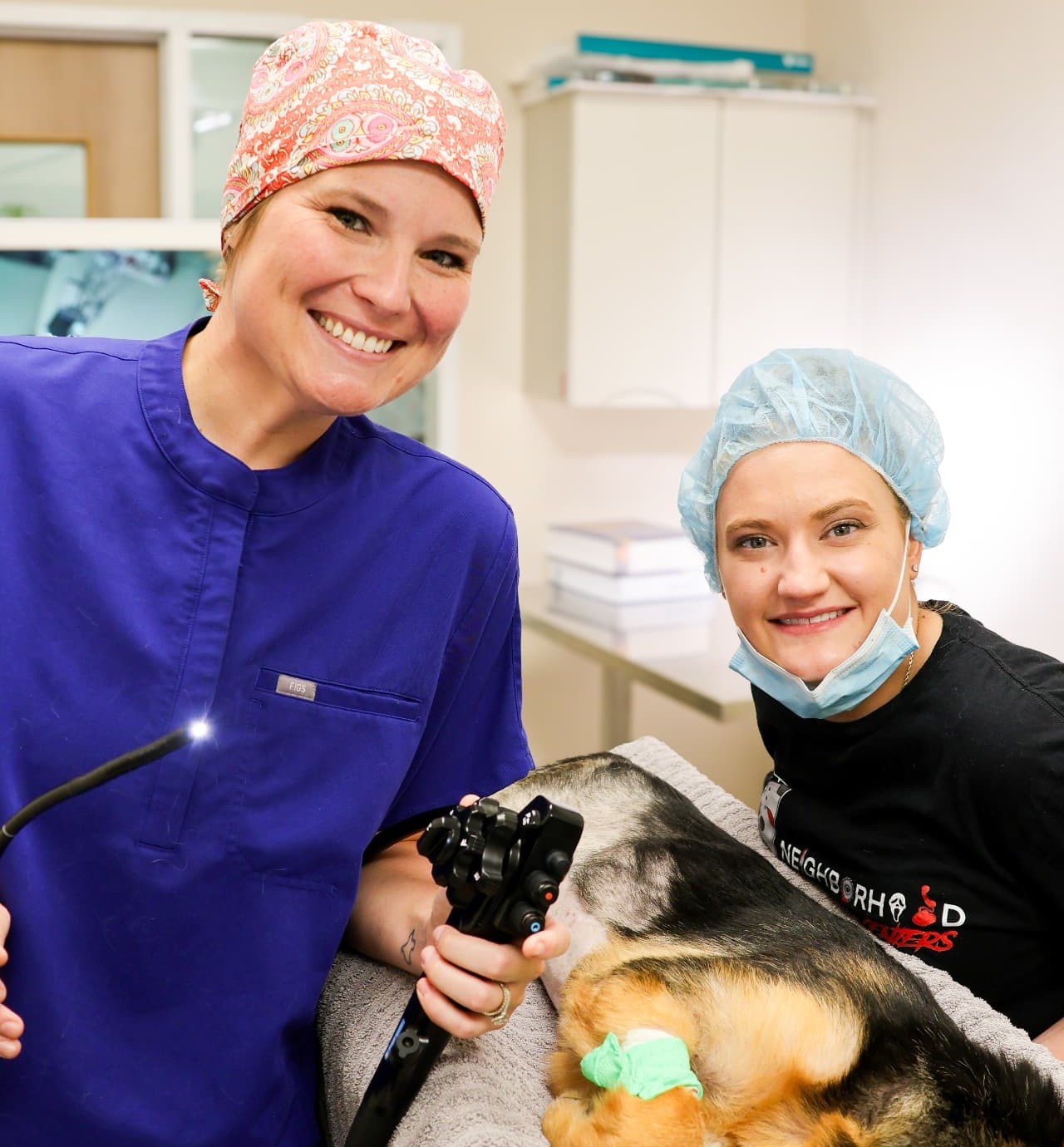
Dr. Gabrielle Casper and Dr. McKenna Campbell with scopes during a laparoscopic procedure
← Surgery at NVC

Canyon Lakes · Humble, Texas

Minimally Invasive Procedures

Laparoscopic surgery & endoscopy

Small cameras. Careful hands. A less invasive option for your pet, when it is the right fit. Explore camera-guided surgery and endoscopic care at your Neighborhood Canyon Lakes clinic.

Welcoming new patients and veterinary referrals

A smaller approach to care

Less invasive. Just as thoughtful.

Less disruption

Smaller incisions or access through natural openings can reduce disruption to surrounding tissue.

Comfort comes first

A less invasive approach may mean less post-procedure discomfort, supported by an individual pain plan.

Recovery with a plan

Some pets recover more quickly. Your team will explain activity limits and follow-up for your pet's procedure.

Minimally invasive does not mean risk-free. Suitability, recovery time and outcomes vary by patient and procedure.

LOVE spay · Recovery & research

Less pain. Less time on the sidelines.

2–3 days

of reduced activity after LOVE spay

Compared with 7–14 days after a traditional spay, according to the Canyon Lakes brochure.

Not complete healing in three days. No baths or swimming for 7–14 days. Follow your pet's individual instructions, especially if another procedure is performed.

0/10 vs 9/10

dogs needed additional pain medication

Laparoscopic-assisted versus open spay in a 2005 randomized study of 20 healthy female dogs. Pain scores were lower in the laparoscopic-assisted group.

The study examined laparoscopic-assisted ovariohysterectomy, not LOVE ovariectomy. It supports reduced pain, not a guaranteed result or a universal percentage reduction.

Devitt CM, Cox RE, Hailey JJ. J Am Vet Med Assoc. 2005;227:921–927. Outcomes vary by patient.

See how LOVE spay works

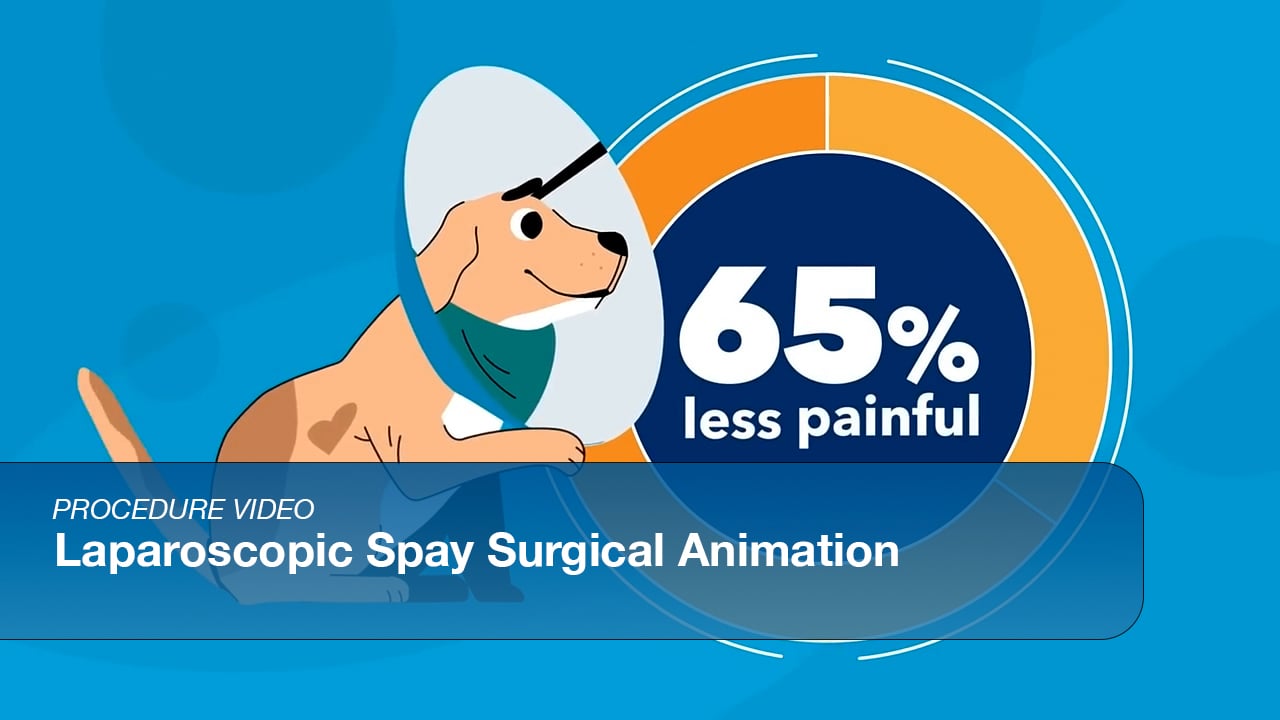
A closer look, without the graphic imagery

This short VetOvation animation shows how a camera and small incisions guide a laparoscopic spay. Your team will explain the approach planned for your pet.

Animation by VetOvation
Non-graphic animated illustration of laparoscopic spay

Small incisions. A closer view.

Laparoscopic surgery

At Canyon Lakes in Humble, laparoscopic surgery uses a small camera and small abdominal incisions for procedures such as laparoscopic spay, also called LOVE spay, and gastropexy. For suitable patients, this approach can reduce tissue disruption and discomfort compared with traditional open surgery.

  • LOVE spays
  • Gastropexy
  • Liver biopsy

The team will confirm the safest approach at your consultation.
Answers from the inside.

Endoscopic procedures

Veterinary endoscopy uses a scope to examine internal passages, collect biopsies or retrieve certain swallowed objects. Rhinoscopy examines the nasal passages; a gastric scope, also called gastroscopy, examines the stomach. Canyon Lakes offers endoscopic foreign body removal, rhinoscopy and endoscopic biopsy. Ask the team which scope procedure is appropriate for your pet. In suitable cases, foreign body removal without surgery means avoiding open abdominal surgery, not avoiding anesthesia or all procedural risks.

  • Foreign body removal
  • Rhinoscopy
  • Endoscopic biopsy

The team will confirm the safest approach at your consultation.

Your Neighborhood surgical team

Advanced care at Canyon Lakes

AAHA Accredited

Canyon Lakes is NVC's only location offering laparoscopic procedures. Our team will talk through your pet's health, the available options and an estimate before treatment.

Dr. Gabrielle Casper has a strong interest in surgery and laparoscopic procedures. Your pet's care includes pre-procedure assessment, anesthesia monitoring and an individual recovery plan.

NVC Canyon Lakes - Humble

9739 N Sam Houston Pkwy E #110, Humble, TX 77396

(281) 570-4848
Dr. Gabrielle Casper and Dr. McKenna Campbell with scopes during a laparoscopic procedure, with the patient's face out of view
Dr. Gabrielle Casper & Dr. McKenna Campbell at Canyon Lakes

From your first question to home recovery

  1. 01

    Talk with the team

    Bring your pet's medical records and questions. We assess whether a laparoscopic or endoscopic approach is suitable.

  2. 02

    Know the plan

    Review the recommended procedure, testing, anesthesia, an individual estimate and preparation instructions.

  3. 03

    Recover with support

    Leave with pain-management guidance, activity restrictions and a follow-up plan tailored to your pet.

Before your visit

Your questions, answered

These procedures are offered at Neighborhood Veterinary Centers Canyon Lakes in Humble, Texas. Canyon Lakes is the only NVC clinic offering laparoscopic procedures. Contact the team to confirm the appropriate procedure and current availability.

Laparoscopy uses a camera through small abdominal incisions to guide surgery. Endoscopy uses a scope to examine internal passages, obtain biopsies or remove certain foreign objects. The approach depends on the area being examined and your pet's needs.

Canyon Lakes lists laparoscopic LOVE spays, gastropexy and liver biopsy, plus endoscopic foreign body removal, rhinoscopy and endoscopic biopsy. A consultation is needed to confirm which approach is suitable for your pet.

LOVE stands for laparoscopic ovariectomy, a type of laparoscopic spay. The ovaries are removed using a camera and small abdominal incisions. Your Veterinarian will explain how it differs from a traditional spay and whether your pet is a candidate.

Gastropexy attaches the stomach to the abdominal wall to help prevent stomach twisting, a dangerous part of gastric dilatation-volvulus (GDV). Canyon Lakes offers laparoscopic gastropexy. Your Veterinarian will discuss your dog's risk and whether it is appropriate, either on its own or alongside a laparoscopic spay. Gastropexy does not prevent every episode of bloating; suspected bloat is still an emergency.

Rhinoscopy uses a scope to examine the nasal passages. A gastric scope, or gastroscopy, examines the stomach and may help investigate symptoms, obtain samples or retrieve suitable swallowed objects. These are forms of endoscopy. Contact Canyon Lakes to discuss your pet's symptoms and confirm the appropriate scope procedure and availability.

Yes. Laparoscopic surgery and these endoscopic procedures require anesthesia. Your team will review your pet's health, pre-procedure testing, monitoring and pain management before treatment.

The Canyon Lakes brochure describes 2–3 days of reduced activity after a laparoscopic spay, compared with 7–14 days after a traditional spay. This is not a promise of complete healing in three days. Avoid baths and swimming for 7–14 days and follow your Veterinarian's individual instructions. Additional procedures, such as gastropexy, may require longer restrictions.

A 2005 randomized study of 20 healthy female dogs compared open ovariohysterectomy with laparoscopic-assisted ovariohysterectomy. Nine of 10 dogs in the open group needed additional postoperative pain medication; none of the 10 in the laparoscopic-assisted group did. Pain scores were lower in the laparoscopic-assisted group. The study evaluated a different spay technique from LOVE ovariectomy and does not guarantee an individual pet's outcome.

Sometimes. Endoscopic foreign body removal may retrieve a suitable swallowed object without open abdominal surgery. Your pet still needs anesthesia, and the object's size and location, your pet's condition and any tissue damage determine whether a scope is safe and effective. Some pets need surgery instead. Prompt treatment of a dangerous swallowed object can be lifesaving, but no approach guarantees an outcome. Contact a Veterinarian promptly rather than waiting for a routine consultation.

Pricing depends on the procedure, your pet's health and any testing or additional treatment needed. Canyon Lakes will discuss an individual estimate before treatment. NVC accepts CareCredit and Cherry Pay, subject to provider approval and terms.

Yes. Referring Veterinarians can send patient records to CanyonLakesReception@gonvc.com and contact Canyon Lakes to discuss the case. The team will coordinate scheduling and share the surgical report with the referring practice.

For pet families

Let's talk about your pet's options

A consultation is the first step. Our Canyon Lakes team will help you understand what is possible and what is right for your pet.

Schedule a consultation

For referring Veterinarians

A partner in your patient's care

Send patient records and contact Canyon Lakes to discuss the case. Our team coordinates scheduling and shares the surgical report with your practice.

Send a referral

CanyonLakesReception@gonvc.com